Instructional Design Walkthrough
De-escalation Essentials
A design walkthrough showing how scenario-based learning supports frontline healthcare staff in recognizing agitation, choosing an appropriate response, and maintaining safety.
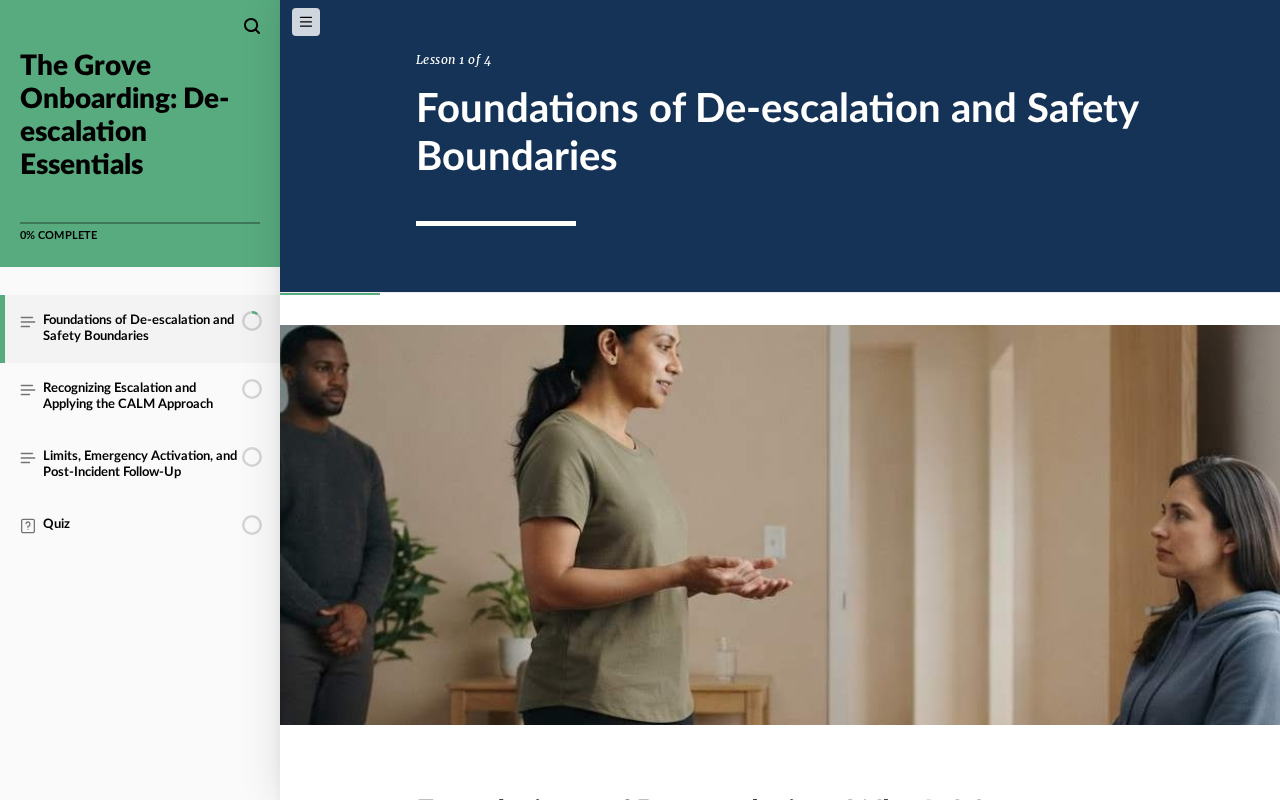
De-escalation Essentials is a module within a healthcare onboarding and competency program developed in Articulate Rise 360. This walkthrough explains the learning need, objectives, design decisions, and opportunities for further improvement.
Project overview
- Audience
- New frontline healthcare team members
- Context
- Healthcare onboarding
- Authoring tool
- Articulate Rise 360
- Approach
- Scenario-based learning and interactive knowledge checks
- Skill focus
- Recognition, response, safety boundaries, and follow-up
01
The problem learners faced
New frontline team members could recognize that a situation was escalating, but they were less sure what to do in the first minute, how to set a safety boundary without making things worse, and what to do after an incident.
Reading a policy alone did not build that judgment.
02
Who the learners are
New healthcare team members in a 30-day onboarding pathway, many of them CNAs and other frontline staff. The design assumes varied experience, limited time, and a need for practice they can apply on the next shift — not passive reading.
03
What learners must be able to do
By the end of the module, learners should be able to:
- Recognize early signs of agitation before a situation escalates.
- Apply the CALM approach in the moment.
- Set a safety boundary clearly and respectfully.
- Complete appropriate post-incident follow-up.
| Objective | Where it is practiced | How it is checked |
|---|---|---|
| Recognize early signs of agitation before a situation escalates | Scenario step: early agitation | Knowledge check: choose the right response in the situation |
| Apply the CALM approach in the moment | Scenario response choices | Knowledge check: choose the right response in the situation |
| Set a safety boundary clearly and respectfully | Boundary-setting rehearsal with wording and positioning | Knowledge check: choose the right response in the situation |
| Complete appropriate post-incident follow-up | Post-incident follow-up step in the scenario | Knowledge check: choose the right response in the situation |
04
Design choices—and why
Each decision connects to an instructional purpose.
Scenario first, not policy first
Learners meet a realistic situation before they are given the framework, so the CALM approach answers a problem they have already felt, rather than a rule they have to memorize.
One decision at a time
The scenario breaks escalation into recognizable steps — early agitation, response, boundary, follow-up — so learners practice judgment in sequence instead of trying to hold the whole incident in their head at once.
Safety boundaries as a skill, not a slogan
The module treats setting a boundary as something to say and do, with wording and positioning learners can rehearse, not just a statement that boundaries matter.
Post-incident follow-up included
Recovery and reporting are taught as part of the same skill, because an incident that is never followed up teaches the wrong lesson.
Interactive knowledge check with a purpose
The check is not a recall quiz at the end; it tests whether learners can choose the right response in a situation, which is the competency the job actually requires.
Accessible by design
Structured content, clear objectives, and a text reading companion alongside the lesson, consistent with the accessibility-conscious approach used across the portfolio samples. Samples contain no patient or employee information.
05
Reflection · Proposed enhancement
What I would change next
I would add branching feedback to the scenario so learners can see how their choices affect the situation. When a learner selects a less effective response, the feedback would explain why it could increase tension and give them an opportunity to try again. This would provide additional practice before applying the skill in the workplace.
Branching feedback is not part of the current module; it is a planned improvement for a future revision.
06
Tools
- Articulate Rise 360
- SCORM 1.2
- Canva
- HeyGen
- Microsoft PowerPoint
- AI-enabled content tools